Scalp micropigmentation (SMP) can work very well on Black and brown skin, and in some ways darker skin is more forgiving, because there is less contrast between scalp and stubble. But it brings its own questions: the right pigment and undertone, a higher risk of keloid scarring and post-inflammatory darkening, and the need for an artist whose healed results on similar skin you can actually see.
Key takeaways
- Pigment has to be matched to your stubble and your skin’s undertone. A shade that suits pale skin can look flat or ashy on darker skin.
- Keloids are more common in people of African and Asian descent. If you have ever formed a keloid, discuss SMP with a GP or dermatologist first.
- Post-inflammatory hyperpigmentation, darkening after skin injury, is more common in darker skin. Gentle technique and good aftercare reduce the risk.
- Hair loss on Black scalps is sometimes traction alopecia or a scarring condition, not pattern loss. Get a diagnosis before you book.
- Ask to see healed photos, at least a month old, on clients with skin like yours. Fresh results tell you very little.
Why skin tone changes the SMP plan
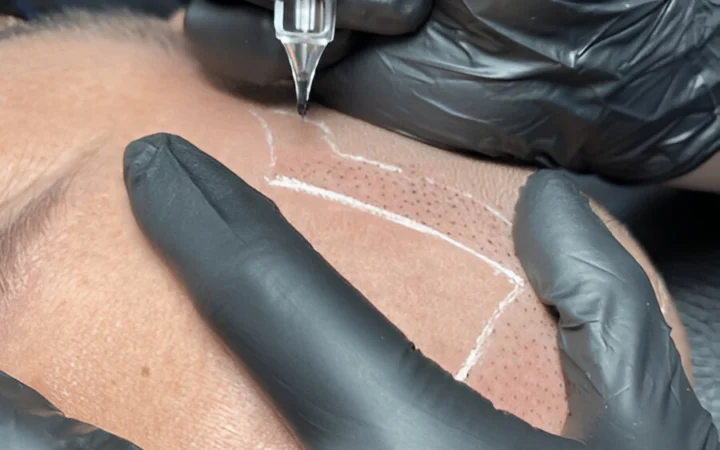
SMP is the same technique on every skin: thousands of tiny dots of pigment placed in the upper dermis to look like the bases of shaved hairs. What changes is how those dots sit against the skin around them.
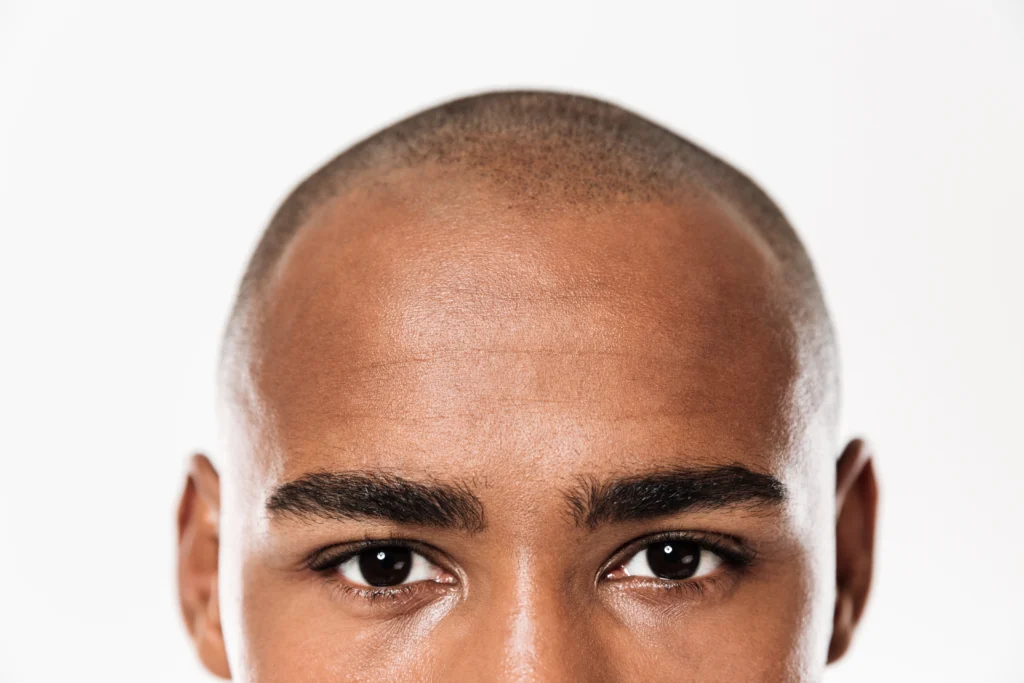
On pale skin, dark stubble stands out sharply, and the artist’s job is partly to soften that contrast. On deeper brown and Black skin, the scalp and shaved hair are often closer in tone, so the dots blend more easily. That is good news for realism. It also means a heavy hand shows quickly: dots that are too large, too dark or too tightly packed read as a solid shadow rather than stubble.
Hair texture matters too. A widely cited 2015 review of SMP in the Journal of Clinical and Aesthetic Dermatology gave average follicular unit counts that varied by ancestry, with lower average counts on African scalps than on European or Asian ones. Those are broad averages that will not describe any individual, but the principle is useful. Tightly curled hair covers the scalp differently from straight hair, so the dot pattern that looks natural on one head can look too dense or too regular on another. A good artist copies the pattern of your own stubble at the sides and back rather than a template.
Pigment choice and undertones
Most SMP pigments are based on black, diluted to produce a range of greys. A clinicopathologic report published in Skin Appendage Disorders in 2022 noted that black pigment is often diluted to achieve a visual shade of grey that blends with the patient’s scalp and hair colour, and that most pigments used are inorganic compounds such as iron oxide, titanium dioxide or barium sulfate.
On darker skin, the undertone is where results succeed or fail. Brown skin can carry warm, golden, red or neutral undertones, and the stubble shade sitting on top of it can look very different in daylight from how it looks under clinic lights. A shade that is too cool can look ashy against warm brown skin; one that is too light can look like grey patches on a dark scalp. The most reliable test is to see healed work. Ask for a small patch test in an area you can check, and look at it in daylight four weeks later.
Our guide to colour matching explains how artists choose shades in more detail.
Sun is worth a word too. The BAD’s skin of colour guidance notes that people with the darkest skin have the most melanin and are usually best protected from the sun, and that sun protection to avoid sunburn is probably unnecessary in very dark brown skin in the UK. It adds that natural protection does not mean complete resistance to sun damage. For SMP the reason to use daily SPF on the scalp is slightly different: it is standard aftercare because sunlight is one of the things that fades pigment over time. A shaved scalp catches more sun than you might expect, and a hat on bright days does the same job.
Keloid and hypertrophic scar risk
This is the most important medical question for many people with darker skin. The British Association of Dermatologists (BAD) explains the difference. A hypertrophic scar is thick and raised but stays within the original wound and usually flattens with time. A keloid overgrows the wound, can follow very minor skin damage such as an acne spot, spreads beyond the original area and may be permanent.
The BAD says keloids can affect anyone but are more common in some groups, including people of African, Asian or Hispanic descent. It also notes that people who have had a keloid before are more likely to form another if their skin is damaged again, and specifically advises people at increased risk to avoid skin trauma where possible, naming tattooing.
SMP needles only reach the upper dermis and the wounds are tiny, but it is still repeated skin trauma across a large area. If you have ever had a keloid, from a piercing, acne, surgery or a previous tattoo, speak to your GP or a dermatologist before booking, and tell the artist at consultation. A patch test is essential, and because the BAD notes that a keloid can take a year or longer to appear, a short wait before full treatment is sensible. Many artists will decline treatment for people with a clear keloid history, and that is a sign of a careful artist, not an unhelpful one.
Shaving brings its own issue. The BAD’s skin of colour guidance notes that pseudofolliculitis, inflamed bumps from hairs trapped under the skin after shaving, is more common in men of sub-Saharan African lineage. A shaved-look SMP means shaving every few days for good, so if you get razor bumps on your scalp, talk to your artist about shaving methods before you commit.
Post-inflammatory hyperpigmentation
The BAD describes post-inflammatory hyperpigmentation (PIH) as darkening of the skin after an injury or skin condition, such as a burn, eczema or infection. It is more common in darker skin types, and the darkening is usually temporary. More severe injury can instead cause post-inflammatory hypopigmentation, a lightening of the skin, which is usually permanent.
For SMP, that means the skin around the dots may darken for a while after treatment, or, if the work is too aggressive, could lighten. Both risks rise with heavier technique and with complications such as infection. A 2022 report noted that pigment placed too deep can spread and look patchy or blotchy, while pigment that is too shallow is shed with the skin. Getting the depth right matters on every skin tone, and the consequences of getting it wrong can be more visible on darker skin.
Following aftercare closely helps: no washing the area for the first four to five days, no heavy sweating, swimming or direct sun, then daily SPF and gentle cleansing, and no sunbeds or saunas for the first month. If you notice dark patches, spreading redness, pain or swelling, see your GP. Our guide to SMP side effects and risks covers infection and allergy, and our day-by-day aftercare guide sets out the first fortnight.
Traction alopecia and other causes to rule out
Not all hair loss on Black scalps is pattern hair loss, and the cause matters for SMP. The BAD describes traction alopecia as hair loss caused by constant pulling, most often from tight hairstyles such as tight ponytails, buns, weaves, extensions and tight braids including cornrows and locs. It is often seen in women and children of African descent, has been noted in some Sikh men, and can affect anyone whose hair is pulled tightly.
The BAD says early traction alopecia can recover completely if the tension stops, with regrowth possibly starting around three months later, but long-standing traction can permanently destroy follicles, leaving smooth, shiny scalp. That distinction decides whether SMP is appropriate. If your loss is recent, the priority is changing your styling and seeing whether hair returns. If it is long-standing and a doctor confirms the follicles are gone, SMP can be a good way to soften a receded hairline or temples.
The BAD’s guidance on caring for Afro-textured hair also notes reports linking chemical relaxers with central centrifugal cicatricial alopecia (CCCA), a scarring hair loss seen in Black women. Scarring conditions should be confirmed inactive by a dermatologist before any pigment goes in. Alopecia UK also notes that a UK study found people of Asian, Black and Mixed ethnic groups were at higher risk of alopecia areata than those of White ethnicity. If your loss is patchy or sudden, start with a GP. Our guide to SMP for women covers the wider checks worth having.
Choosing an artist with healed results on similar skin
Most SMP marketing photos show pale scalps, taken on the day of treatment. Neither tells you much if your skin is deep brown. When you are choosing an artist, look for:
- Healed photos, at least four weeks after the final session, on clients with skin and hair like yours
- Photos in daylight as well as studio lighting
- A clear, unhurried discussion of keloid history, PIH and any scalp conditions
- A patch test before the first full session, checked once healed
- A plan that copies your own stubble pattern rather than a standard density
- Willingness to say no, or to refer you to a doctor first
Our guide to choosing an SMP artist covers licensing, hygiene and red flags. Costs are the same as for any skin tone: typically £1,500 to £2,800 for the top and crown, or £2,200 to £3,800 for a full head, including the touch-up, with London and the South East usually 15 to 30 percent higher.
Frequently asked questions
Does SMP look natural on very dark skin?
It can look very natural, because the contrast between scalp and stubble is often lower. The risk is overworking it: dots that are too dark or too dense look like a shadow rather than hair. Healed examples on similar skin are the best guide.
I have a keloid on my ear from a piercing. Can I still have SMP?
A previous keloid is a significant warning sign, because the BAD notes people who have had one are more likely to form another after skin damage. Talk to your GP or a dermatologist before booking. Many artists will not treat people with a keloid history.
Will the pigment turn blue or green on darker skin?
Healed colour that looks wrong is one of the reasons people seek correction, on any skin tone, though there is little published research on how often it happens. What is known is that pigment placed too deep can spread and look blotchy. Ask to see healed results, at least a month old, on similar skin before you commit.
Can SMP cover traction alopecia at my hairline?
If the loss is long-standing and permanent, often yes. If it is recent, stopping tight styles may let the hair recover, so see a GP first and give it time.
Sources
- British Association of Dermatologists, “Keloids” patient information leaflet, accessed November 2026.
- British Association of Dermatologists, “Skin of colour”, accessed November 2026.
- British Association of Dermatologists, “Traction alopecia” patient information leaflet, accessed November 2026.
- British Association of Dermatologists, “Caring for Afro-textured hair”, accessed November 2026.
- Alopecia UK, “Alopecia areata”, accessed November 2026.
- Skin Appendage Disorders, “Scalp micropigmentation: a clinicopathologic correlation” (2022), accessed November 2026.
- Journal of Clinical and Aesthetic Dermatology, “Scalp micropigmentation” (2015;8(3):35–42), accessed November 2026.