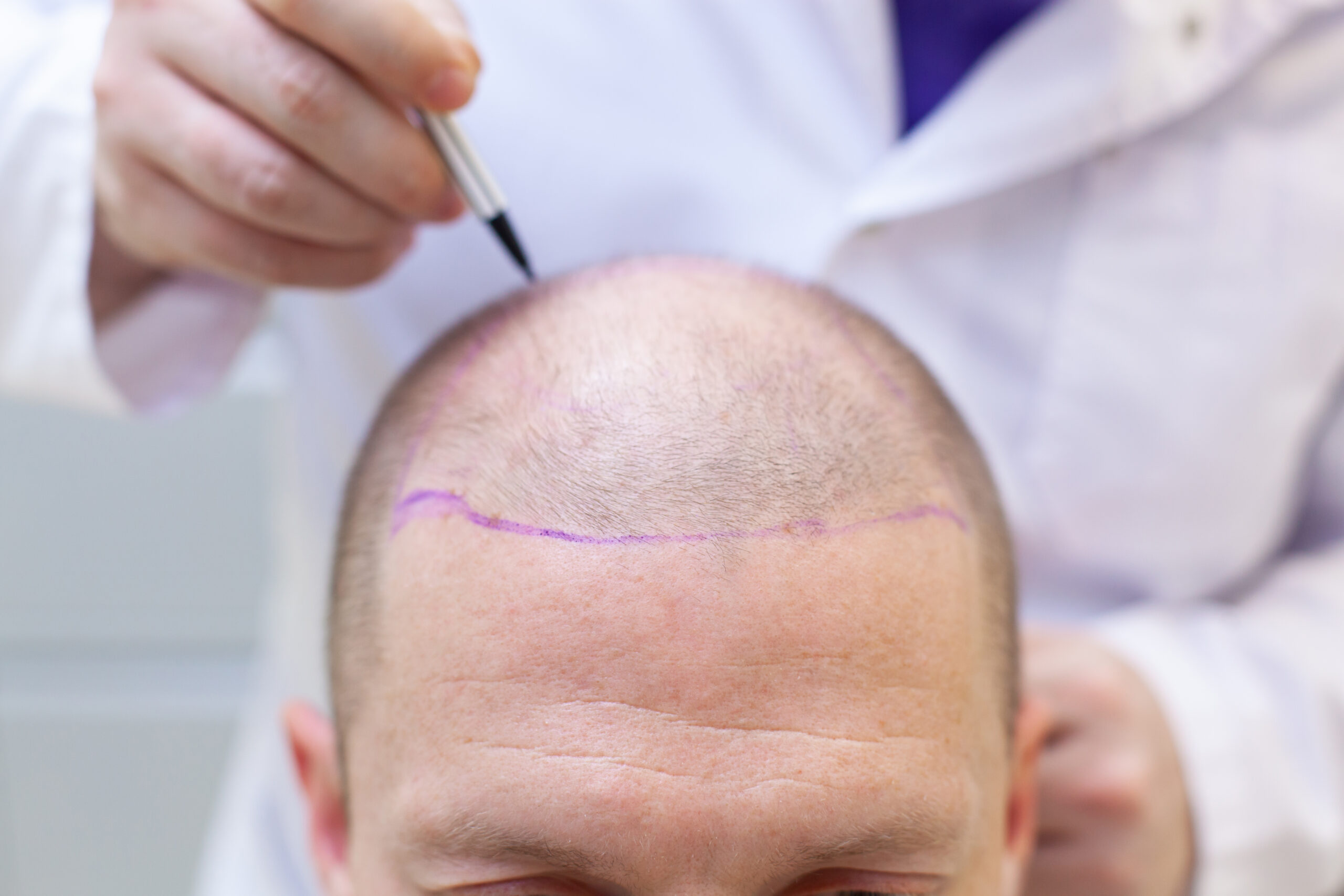
Yes, you can almost certainly have an MRI scan with scalp micropigmentation. Reactions in tattooed skin during MRI are rare, usually a brief burning or stinging that stops when the scan stops, and large studies of people with tattoos and permanent make-up have found very few problems. SMP itself has not been studied, and it sits right inside the head coil during brain scans, so tell the radiographer and speak up if you feel anything.
Key takeaways
- MRI reactions in tattoos are described as rare but well known, and are usually short-lived tingling, burning or mild swelling.
- They have been reported more often in cosmetic tattoos, such as permanent eyeliner, than in body art.
- In a German study, 305 people with tattoos or permanent make-up had 3 Tesla brain scans with no adverse events.
- No research has looked at SMP specifically. Mention it on your safety form and to the radiographer.
- Never cancel a scan you need because of SMP without talking to the team who referred you.
Why tattoos come up on an MRI safety form
An MRI scanner uses a very strong magnet and pulses of radio waves to build images. Anything in or on your body that conducts electricity or responds to magnetism can, in principle, interact with it. That is why the safety questionnaire asks about pacemakers, metal fragments and surgical clips, and why many forms ask about tattoos and permanent make-up too.
The concern with tattoos is the pigment. NHS Greater Glasgow and Clyde’s MRI physics team explains that there have been “very rare” cases of people with tattoos receiving burns during MRI, thought to be caused by metal-containing compounds in tattoo or make-up dye, in which the radio waves induce small currents. It adds that such burns “tend to be superficial and transient” and that their occurrence is unpredictable (NHS GGC MRI Physics). SMP is a form of cosmetic tattoo, as our article on whether SMP counts as a tattoo explains, so the same question applies.
What the research actually shows
The evidence on tattoos and MRI is a mix of case reports, which tell you a reaction is possible, and larger studies, which tell you how often it happens. They point the same way: possible, but uncommon.
The Rhineland Study, a large population study in Bonn, is the most useful for SMP. Rather than excluding people with tattoos, it scanned everyone eligible and asked them to squeeze an alarm ball at the first tingle. Of the 3,639 people scanned, 305 had tattoos, permanent make-up or both, including 85 with permanent make-up, and about a fifth of the tattoos sat within the head coil. Nobody reported an adverse event, and permanent make-up did not make any brain images unreadable (Frontiers in Neurology).
The study also points out a gap in earlier reassurance. A widely quoted study of 330 people put the chance of a tattoo reaction at about 0.17 percent, but it excluded tattoos on the head and neck. For SMP, the head is the only place that matters, which is why the Rhineland data and the cosmetic-tattoo reports are more relevant than the headline figure.
Why permanent make-up gets more attention than body art
A 2023 case report from a Danish hospital tattoo clinic summarises the pattern: MRI reactions are “exceptional in decorative body tattoos but more frequent in cosmetic tattoos despite the smaller tattooed area, such as permanent eyebrows or eyeliner tattoos”. Cosmetic inks are often based on iron oxide pigments, chosen to match skin tones, while body-art black is usually carbon (Case Reports in Dermatology). The first reported case, in 1987, involved a permanent eyeliner.
The same report adds a twist. The patient’s reacting tattoos turned out to contain carbon black, with no detectable iron in the skin, and the authors concluded that MRI tattoo reactions “are not limited to magnetic contaminants alone”. So it is not as simple as “iron is risky, carbon is safe”.
What the reactions feel like, and how they are thought to happen
Reported reactions are a sudden burning, smarting or stinging in the tattooed skin, sometimes with brief redness and swelling, usually as the scan begins. In the 2023 case, the pain disappeared within seconds of the scan stopping. Researchers have proposed more than one mechanism: tiny magnetic particles being pulled by the magnet, or the radio-frequency pulses inducing currents in pigment particles that sit near nerve endings in the dermis. The 2023 report’s authors argue that simple heating does not explain them. None of this has been worked out for SMP, which uses far less pigment per square centimetre than a solid tattoo but covers a large area of the scalp.
What this means for SMP
SMP pigment sits in the upper dermis of the scalp, the area closest to the head coil in any brain or head scan. SMP pigments are made by different manufacturers, and their composition varies from product to product. Most clients have no idea which one their artist used.
That suggests three sensible habits:
- Keep a record. Ask your artist for the name of the pigment and keep it with your aftercare notes. Our guide to SMP pigments explains what to look for on a safety data sheet, and our article on tattoo ink regulations in the UK covers the rules on what inks may contain.
- Declare it every time. Write “scalp micropigmentation (cosmetic tattoo on the scalp)” on the form, with the year and pigment name if you know them.
- Think about timing if you can. If you know you have planned scans, for example follow-up imaging after cancer treatment, tell your team before you book SMP. Our guide to SMP after chemotherapy covers that conversation.
On the day of your scan
- Tell them before you are in the scannerMention SMP on the safety questionnaire and again to the radiographer. They will decide whether anything needs to change. Often nothing does.
- Ask about the call buttonYou are usually given an alarm or call button. The radiographer can talk to you throughout and can stop the scan quickly.
- Speak up straight awayIf you feel tingling, warmth, burning or tightness in your scalp, press the button or say so. In reported cases, symptoms eased when scanning stopped.
- Flag it early if you will be sedatedNHS GGC notes that people under general anaesthetic cannot report heating, which increases their risk. If you are having a scan under anaesthetic, make sure the team knows in advance.
- Check your scalp afterwardsBrief redness should settle quickly. Anything lasting, blistering or painful should be checked by a GP or NHS 111.
Fresh SMP raises a natural question: should you wait after a session before a scan? NHS GGC’s MRI physics team says there is currently no evidence that people with recent tattoos cannot be scanned, though individual scanning centres may have their own policies. A recently treated scalp is also still healing, so if the scan is not urgent and you have the choice, it is reasonable to ask whether it can sit outside the first few days after a session. If it is urgent, have the scan. Our day-by-day SMP aftercare guide explains what the healing scalp needs.
The one thing not to do
Do not avoid or delay an MRI you need because you have SMP. The scan may be checking something that matters far more than your scalp, and the risk of a reaction is low. If you are anxious, call the department beforehand and ask to speak to a radiographer. For a fuller picture of SMP’s other risks, our guide to SMP side effects and risks covers infection, allergy and pigment problems, and if you have a question about your own situation you can ask our AI assistant.
Will SMP spoil my MRI images?
Pigment can occasionally cause small artefacts near the skin surface, mostly reported with cosmetic tattoos. In the Rhineland Study, permanent make-up did not make any brain scans unreadable. Radiographers can usually work around minor artefacts.
Do I need to have my SMP removed before an MRI?
No. There is no reason to remove SMP for a scan, and laser removal of SMP carries its own risks and costs. Just declare it.
Does a CT scan or X-ray cause the same problem?
No. The tattoo reactions described here are specific to MRI, which uses magnetism and radio waves. CT and X-ray work differently.
I felt stinging during a scan. Can I still have MRI in future?
Tell the department and your doctor what happened. People who have had a reaction have gone on to be scanned again, sometimes with adjustments, but that decision belongs to the radiology team.
Sources
- NHS Greater Glasgow and Clyde MRI Physics, “Patients with tattoos”, accessed November 2026.
- “Safety of Tattoos, Permanent Make-Up, and Medical Implants in Population-Based 3T Magnetic Resonance Brain Imaging: The Rhineland Study”, Frontiers in Neurology, 2022 (PMC), accessed November 2026.
- Alsing KK et al., “MRI-Induced Neurosensory Events in Decorative Black Tattoos: Study by Advanced Experimental Methods”, Case Reports in Dermatology, 2023 (PMC), accessed November 2026.