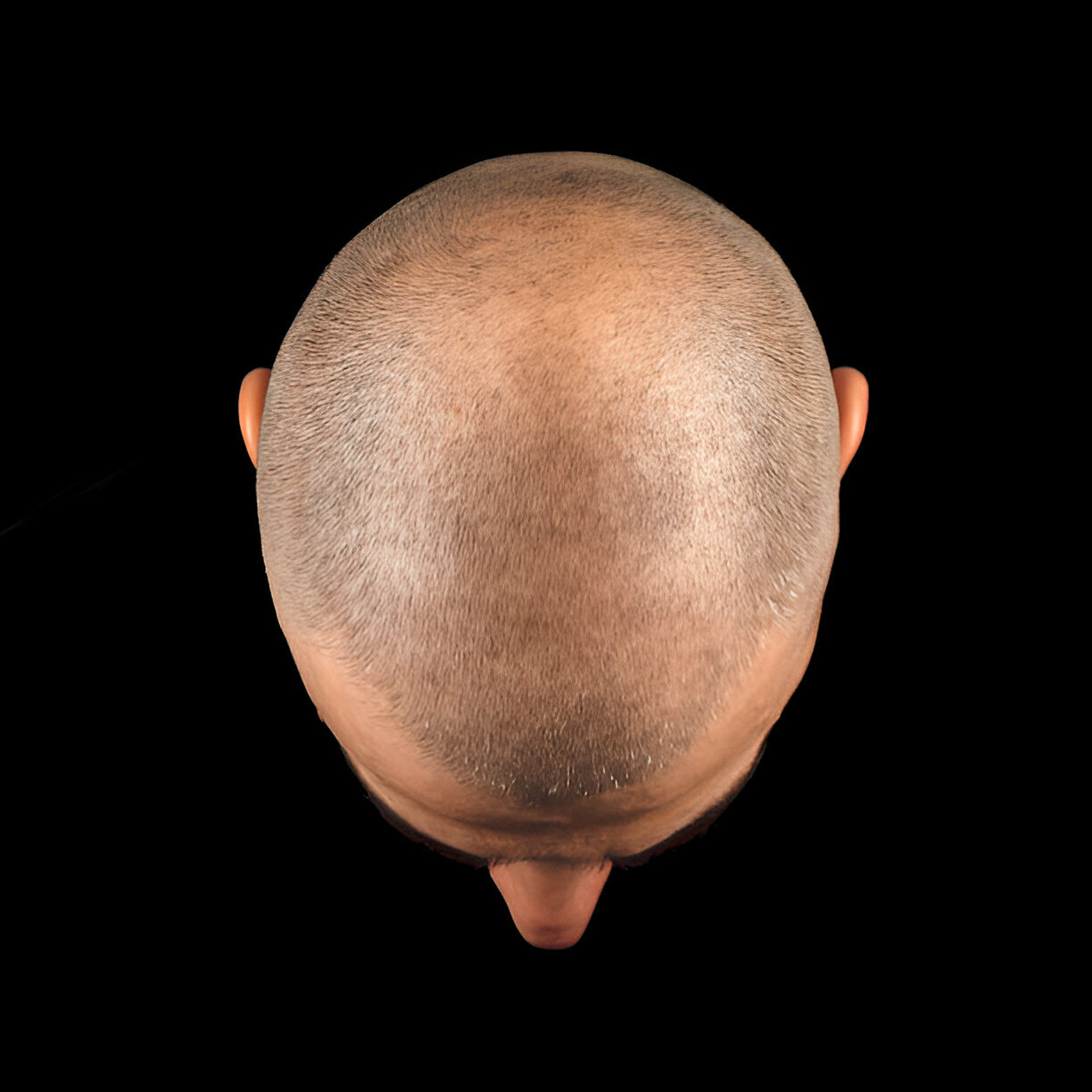
With a shaved-head SMP result, shaving is the maintenance. The pigment dots copy the look of very short stubble, so your real hair has to be kept at the same length, which for most people means clippers with no guard or a foil shaver every two or three days. Do not shave the treated area until the first four to five days after a session have passed and your artist has said it is safe, and then start gently.
Key takeaways
- SMP only reads as stubble if the hair you still have is kept just as short. Let it grow and the flat dots start to show.
- Wait out the first four to five days after each session before shaving the treated area, and start with an electric shaver rather than a blade.
- A foil or rotary shaver is gentler on the scalp than a wet razor and leaves a stubble finish that suits SMP well.
- NHS and dermatology advice for avoiding ingrown hairs is to shave with the grain, leave a little stubble and avoid shaving daily if you can.
- Persistent bumps or spots on the scalp need sorting out before your next session, because active folliculitis is a reason to pause treatment.
Why shaving is part of the SMP deal
A shaved-head SMP treatment is designed around a particular length of hair. The artist matches the size, spacing and shade of the dots to the stubble on the sides and back of your head, so that the bald areas look like the same stubble. That match lasts only as long as you keep the real hair at that length. Leave it a week and the hair on the sides and back has texture and shadow that the dots on top cannot copy. Our guide to what makes SMP look real or fake lists hair length as one of the biggest giveaways.
That is why our guide to SMP for men by Norwood stage suggests living with a shaved head for a month before you book anything. If the routine does not suit you, it is better to find out before paying for treatment. Not everyone with SMP shaves, though. Density work for people who keep longer hair is a different approach, explained in our guide to SMP for thinning hair, and if you are thinking of growing your hair later, see growing your hair out after SMP.
When you can shave after a session
For the first four to five days after each session, the usual guidance is not to wash the treated area, and that rules out shaving it too. Dragging a blade or foil across skin that is still closing can lift surface pigment and break the skin. Our full SMP aftercare guide covers this window.
After that, follow your artist’s instructions, because they differ. A cautious approach looks like this:
- Before the session: shave to your usual length a day or so beforehand, unless your artist asks for something different. They will want to see your natural stubble shade.
- Days 0 to 5: leave the treated area alone. Hair on the sides and back can be tidied with clippers if it does not touch the treated skin.
- First shave after the session: use clippers or an electric foil shaver, light pressure, on dry or just-damp skin. No blades yet.
- Once the scalp is comfortable and no longer flaking: you can return to your normal routine, including a wet shave if that is what you prefer and your artist agrees.
If the dots look lighter and patchy during this time, that is the normal ghost stage of healing rather than anything your shaver has done. Our guide to the stages of SMP healing explains why.
Choosing your tool
There is no single right tool. The useful question is what finish you want and how your scalp reacts. A completely smooth wet shave is not needed for SMP, because the dots are designed to look like stubble, not bare skin.
| Tool | Finish | Kindness to the scalp | Points to know |
|---|---|---|---|
| Clippers, no guard | Visible short stubble | Gentle; does not cut at skin level | Fast, good for the sides and back; may leave hair slightly longer than the SMP is designed for |
| Foil shaver | Very short stubble | Gentle; a common choice with SMP | Works well every two or three days; keep the foil clean and replace worn foils |
| Rotary head shaver | Close, near-smooth | Usually gentle | Designed to follow the curve of the head; can be quicker on a full head |
| Wet razor (cartridge or safety) | Smoothest | Most likely to cause nicks, irritation and ingrown hairs | NHS advice suggests trying an electric razor instead if you get ingrown hairs |
The British Association of Dermatologists’ advice on razor bumps notes that wet shaving usually gives a closer shave than an electric razor, and that people who wet shave should avoid methods so close that the hair retracts back inside the follicle, which is what sets off ingrown hairs.
A low-irritation shaving routine
The NHS guidance on ingrown hairs is written for faces and legs, but it applies just as well to a scalp. Put together with the BAD advice, a routine looks like this:
- Soften the hairShave at the end of a shower, or wet the scalp with warm water first. If you use a blade, use a shaving gel.
- Go with the grainShave in the direction the hair grows. On the crown it grows outwards from the whorl, so the direction changes as you move around the head. Run your hand over it first to feel which way it lies.
- Fewer strokes, sharp edgesUse as few strokes as possible and rinse the razor after each one. Do not use a blunt blade. With an electric shaver, let the head do the work rather than pressing hard.
- Leave a little stubbleThe NHS suggests leaving at least 1mm of stubble to reduce ingrown hairs. With SMP that is rarely a sacrifice, since stubble is the look you are matching.
- Calm the skin afterwardsHold a cool, wet cloth to the scalp, pat it dry, then use a plain, unperfumed moisturiser. During the day, follow it with sunscreen.
Daily sunscreen is the other half of looking after shaved SMP. Our guide to protecting SMP from the sun covers which products sit well on a freshly shaved scalp.
How often to shave
How often depends on how fast your hair grows, how dark it is against your skin, and how close you want the match to be. Most people with SMP settle into shaving every two or three days, and some prefer every day. Dark, fast-growing hair against pale skin shows regrowth sooner than fair or grey hair does.
The medical advice leans against daily shaving where you can avoid it. The NHS lists “do not shave every day, if possible” among its tips for preventing ingrown hairs, and the BAD suggests shaving every second day rather than daily if possible. Every other day with a foil shaver is a good compromise for many people. If your hair grows quickly and you want to shave daily, an electric shaver on light pressure is the gentler way to do it.
Razor bumps, ingrown hairs and irritation
Pseudofolliculitis, often called razor bumps or shaving bumps, is inflammation around hair follicles caused by hairs trapped under the skin. The BAD explains that it usually happens when hair has been cut so short that it retracts into the follicle, then grows into the follicle wall as it lengthens. It is more common in men of sub-Saharan African descent and in anyone with coarse, curly hair, and the NHS notes that coarse or curly hair makes ingrown hairs more likely. On black or brown skin the redness can be harder to see, though the bumps may look a different colour from the skin around them.
If you are prone to bumps, these changes usually help most:
- Switch from a blade to clippers or a foil shaver.
- Shave less often, every second day rather than daily.
- Leave a little stubble rather than shaving to bare skin.
- Do not scratch, pick or squeeze bumps, which the NHS warns can damage skin and lead to infection.
- Ask a pharmacist about shaving products and mild antiseptics.
The BAD says that if shaving stops, it can take four to six weeks for the inflammation to settle. With SMP, stopping altogether is rarely practical, so changing technique is the realistic route. If bumps become very painful, hot or swollen, or you feel unwell, the NHS advises seeing a GP. Tell your artist too. Active folliculitis is one of the conditions that means a session should wait until the skin has settled. Our guide to SMP on black and brown skin covers this and other points that matter more for darker skin.
Keeping the illusion convincing
Good shaving habits are mostly about consistency. A few details make a visible difference:
- Even length everywhere. The sides, back and neckline matter as much as the top. A sharp, freshly shaved crown next to three-day growth above the ears is what gives SMP away.
- Matte, not shiny. A very smooth, freshly wet-shaved scalp can reflect light, which flattens the dots. A foil finish and a matte moisturiser or sunscreen look more natural.
- Mind the edges. Take care around the hairline and temples, where SMP is most visible, and avoid tidying them more harshly than the rest.
- Watch for change over time. If your stubble greys, or the dots soften over the years, the match will drift. A refresh rebalances it, and you can compare clinics offering SMP touch-ups when that time comes.
Do you have to shave your head for scalp micropigmentation?
For a full shaved-head result, yes. The dots look like stubble, so your hair needs to be kept equally short. SMP for density under longer hair, often used for thinning hair and by women, does not need a shaved head.
When can I shave my head after SMP?
Not during the first four to five days after a session. After that, follow your artist’s advice, and start with clippers or an electric shaver on light pressure before going back to a blade.
Can I wet shave my head with SMP?
Many people do once the scalp has fully healed. It gives the smoothest finish but is the most likely to cause irritation and ingrown hairs, so switch to an electric shaver if your scalp reacts.
Does shaving every day fade SMP faster?
There is no research that answers this. Some practitioners believe frequent close wet shaving may speed fading slightly. Sun exposure has a much clearer effect, so daily sunscreen matters more than your razor.
Sources
- NHS, “Ingrown hairs”, accessed November 2026.
- British Association of Dermatologists, “Pseudofolliculitis”, patient information, accessed November 2026.