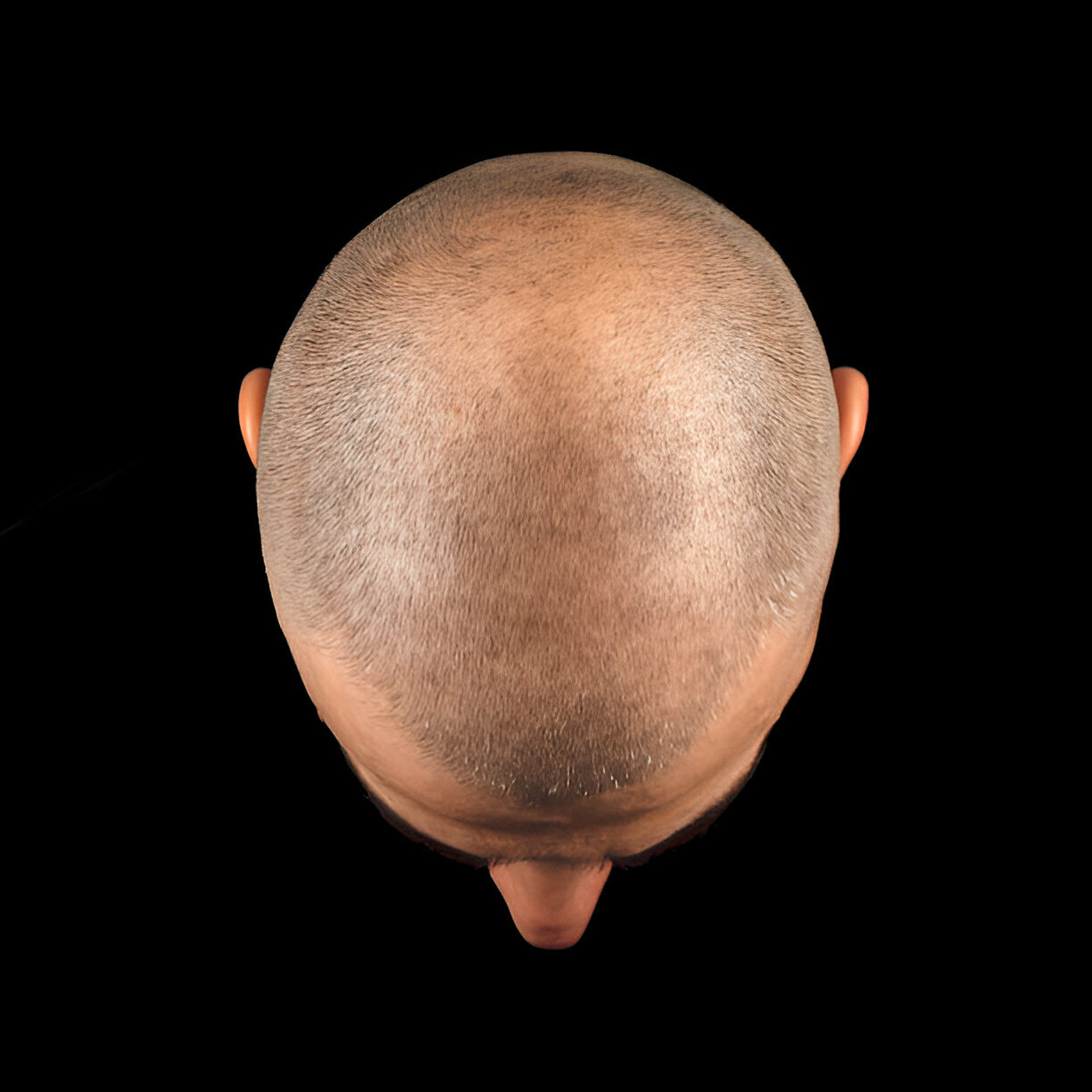
SMP looks its worst in the fortnight after each session, and that is normal. The dots start dark, bold and slightly raised, the skin then dries and sheds fine flakes, and by the second week much of the colour seems to have vanished, leaving a light, patchy “ghost” of the treatment. The skin’s surface takes around a month to renew, which is why the result keeps changing for weeks and why the final look settles about four weeks after your last session.
Key takeaways
- Freshly treated SMP looks darker and heavier than the healed result. Expect it to lighten.
- Week two often brings a faded, uneven stage as surface pigment is shed. This is the point at which many people panic, and it is expected.
- Each later session builds on what has healed, so the scalp looks progressively more even rather than dramatically different.
- Skin healing after tattooing takes roughly a month in research on tattooed skin, matching the four-week settling time artists work to.
- Pain, heat and swelling that get worse rather than better are not part of normal healing. Contact your artist and a GP or NHS 111.
Why SMP changes so much as it heals
An SMP needle places pigment through the outer skin into the upper dermis. Not all of it ends up where it was aimed. Some sits on the surface, some in the outer layers of the epidermis, and some in the dermis, which is the only part that lasts.
A 2015 clinical review of SMP in the Journal of Clinical and Aesthetic Dermatology explains what happens next. The pigment lost at the first hair wash, two to three days after treatment, is the pigment on the surface or in the needle track through the outermost layers. The outer layer of skin turns over in about 27 days, and the authors suggest some pigment stays in the lower epidermis for a few months before it too is shed. They also describe early pigment “bleeding” beyond where it was placed, which an experienced artist has to anticipate.
That is the whole story of SMP healing in one paragraph: what you see on day one is surface pigment plus swollen skin, and what you see a month later is the pigment that actually stayed in the dermis.
About 1 monthfrom the introduction of ink to complete healing, in an electron microscope study of tattooed human skin.Lea and Pawlowski, 1987
That 1987 study looked at biopsies of tattooed skin at intervals from 24 hours to 40 years. It divided healing into three phases: an inflammatory reaction, the rebuilding of the layer between epidermis and dermis, and a return to normal skin. Once the skin looked normal under the microscope, ink was found only in cells in the dermis. It is an old, small study of body tattoos rather than SMP, but it fits closely with what artists see on the scalp.
The healing timeline at a glance
This is the standard sequence for a single session. You will go through it after every session, so a three-session course means three cycles, overlapping with the gaps between appointments.
- Session dayThe scalp looks pink and the dots look sharp and dark. Mild tenderness is common.
- Days 1 to 5Keep the area dry: no washing, heavy sweating, swimming or direct sun. Tiny scabs form over some dots.
- Days 5 to 10Light flaking as the surface heals. The dots soften and look slightly lighter. Do not pick.
- Weeks 2 to 3It can look patchy or faded between sessions. That is expected: the next session builds density.
- Next sessionUsually 1 to 3 weeks later, repeated for 2 to 4 sessions in total.
- About 4 weeks after the last sessionThe result settles into its long-term shade. Daily SPF from here keeps it crisp.
Typical guidance; healing and aftercare rules vary between people and artists. Always follow your own artist's instructions.
Stage by stage after your first session
Day 0 to day 2: red, raised and too dark
Straight after the session, the scalp is pink or red and the dots look bold, sometimes slightly raised, and noticeably darker than the shade you agreed. Some people feel warmth, mild swelling or tightness, a little like mild sunburn. The 2015 review describes redness that appears on the day and disappears within one to two days. On brown or black skin the redness can be much harder to see, so you may notice warmth or tightness more than colour.
At this stage it is easy to think the artist has gone too heavy. They have not, necessarily. Good artists deliberately allow for the pigment that will be lost.
Days 3 to 7: dry, tight and flaking
As the surface closes, the skin becomes dry and may itch. Instead of the crusts you get with a body tattoo, SMP usually produces very fine flaking, and you may find tiny specks of pigment on your pillow. This is surface pigment leaving, not your result falling out. The no-washing, no-sweating, no-sun rules of the first four to five days are covered in our day-by-day aftercare guide, and the most important instruction in this phase is not to pick or rub.
Weeks 2 to 3: the ghost stage
This is the stage nobody warns you about properly. With the surface flakes gone, the dots look softer, smaller and much lighter. Some areas look fuller than others. In bright light the scalp may look as if only a faint shadow of the work is left.
It happens because the pigment still sitting in the epidermis is being shed as that layer renews, and the pigment that remains in the dermis is seen through new, slightly cloudy skin. The unevenness is also part of the plan. First sessions are usually kept deliberately light and spaced out, and the gaps are what the next session fills.
Weeks 3 to 4: settling
Towards the end of the first month the skin’s surface has renewed and the colour stops shifting. The dots look crisp, flat and closer to the intended shade. This is what your artist assesses before the next session, which typically falls one to three weeks after the previous one.
How later sessions look different
Most people have two to four sessions. The 2015 review notes that the authors’ patients usually have two to four, partly so that the artist can stay cautious and be confident that only the upper dermis is reached. A slow approach in each session keeps pigment bleeding to a minimum.
The healing cycle repeats each time, but how it looks changes:
- Session one sets the hairline and lays down a base of dots. It shows the most dramatic healing swing, because almost everything you see is new.
- Session two adds density between the existing dots. Redness and flaking are similar, but because the healed first layer is still there, the ghost stage looks much less alarming.
- Session three, if needed, refines. Artists may add a few dots in a darker or lighter shade to create depth, fix any patches that held less pigment, and soften the hairline. Healing after this session can be barely noticeable to anyone but you.
Our guide to how long the full SMP process takes explains how sessions are spaced and how to plan time off around them.
Why your healing may not match someone else’s
Two people treated by the same artist on the same day can heal differently. The 2015 review points out that skin thickness, scarring and how much the skin has thinned all change how it takes pigment, and that how much pigment stays in the deeper epidermis varies between people. Scar tissue, an oily scalp and very fair or very dark skin can all change how the dots look as they settle. In their most extreme cases, the review’s authors describe almost complete loss of pigment within a few weeks of the first treatment, which they thought might reflect needle work that was too shallow.
Normal healing or a problem?
Most SMP heals without trouble. The concern is infection, which usually shows as things getting worse rather than better after the first two days. The NHS advice on cellulitis, a common skin infection, describes skin that becomes painful, hot and swollen, and notes that redness may be less obvious on brown or black skin.
| What you notice | Usually normal | Get it checked |
|---|---|---|
| Redness | On the day, fading within one to two days | Spreading or getting worse after day two |
| Swelling | Mild, settling over the first few days | Increasing, hot or painful swelling |
| Skin texture | Tightness, dryness, fine flakes, mild itch | Pus, weeping or crusts that keep returning |
| Colour | Too dark at first, then light and patchy in weeks two to three | Dots blurring into each other or spreading as they heal |
| How you feel | Well | Flu-like symptoms, a high temperature, or feeling hot, cold or shivery |
The NHS advises asking for an urgent GP appointment or using NHS 111 if skin is painful, hot and swollen, and calling 999 or going to A&E if that comes with a very high temperature, a fast heartbeat or breathing, dizziness or confusion. Tell your artist too. Our guide to SMP side effects and risks covers allergic reactions and longer-term problems such as blurring.
Judging the result once it has healed
The fairest time to judge SMP is a month after the final session, in daylight, from normal conversational distance. Photographs taken in the same spot under the same light each week make the healing stages much easier to understand, and stop week two from feeling like a disaster. Our article on judging SMP before-and-after photos explains why fresh work and healed work look so different, which is also worth knowing before you browse healed results from UK clinics.
Once healed, the habits that protect the result take over. Daily sunscreen matters most, covered in our guide to sunscreen for SMP. Our pieces on shaving your head with SMP and returning to the gym and pool deal with the two questions people ask first. Over years rather than weeks, SMP softens and eventually needs a refresh, explained in how long SMP lasts.
Why does my SMP look blotchy a week or two after the session?
Pigment in the outer skin is shed as that layer renews, which leaves some areas lighter than others. Artists expect this and use the next session to even it out. Judge the result once it has settled, not in week two.
Is it normal for SMP to look too dark at first?
Yes. Fresh dots include surface pigment and sit in swollen skin, so they look darker and larger. Most of that excess is gone within the first week or two.
How long does SMP take to heal?
The skin surface usually closes within the first week, but the colour keeps changing for around four weeks after each session. The final look settles about four weeks after the last one.
Will SMP scab like a tattoo?
Usually not in the same way. SMP dots are tiny and shallow, so most people see fine, dry flakes rather than crusts. Heavy scabbing is unusual and worth showing to your artist.
Sources
- Rassman WR et al., “Scalp Micropigmentation: A Concealer for Hair and Scalp Deformities”, Journal of Clinical and Aesthetic Dermatology, 2015, accessed November 2026.
- Lea PJ, Pawlowski A, “Human tattoo. Electron microscopic assessment of epidermis, epidermal-dermal junction, and dermis”, International Journal of Dermatology, 1987, accessed November 2026.
- NHS, “Cellulitis”, accessed November 2026.